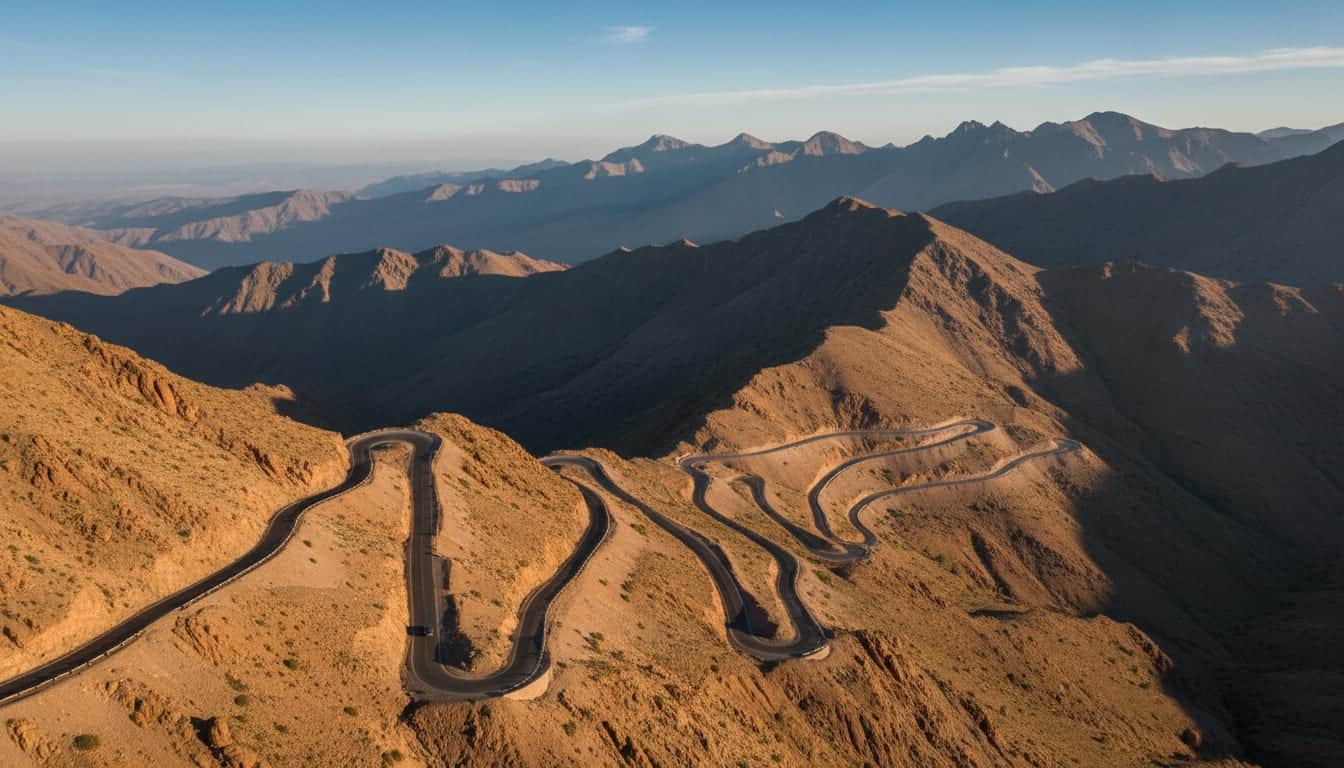
Driving in Morocco is legal, the highways are good, and plenty of tourists do it. But the honest answer from people who drive these roads every week is: it depends entirely on where you're going. Here's the real danger map — and the four legs where even confident drivers hand the keys to someone else.
Yes, it's legal and broadly safe to drive in Morocco as a tourist — the toll highways between the big cities are modern and well-signed, and plenty of visitors rent a car and do it fine. But the honest answer, from people who drive these roads every week, is that it depends entirely on where you're going. The motorways are easy. The mountain passes, the rural roads, the medina edges, and night driving are a different country. This guide is the real danger map, the rules that catch tourists out, and the specific legs where even confident drivers hire a driver instead.
I'm not going to tell you not to drive — that would be dishonest, and for some trips self-driving is the right call (I'll say which). But I will tell you what the rental-company blogs won't, because I'm the one who gets the WhatsApp message when a guest is white-knuckled on the Tizi n'Tichka in the rain.
Is it actually safe to drive in Morocco?
On the toll motorways (autoroutes) between Tangier, Rabat, Casablanca, Marrakech and Fes — yes, genuinely. They're modern, well-maintained, clearly signed in Arabic and French, and lightly trafficked. If your trip is city-to-city on the autoroute, self-driving is straightforward. The risk climbs sharply the moment you leave them: secondary roads, mountain passes, and rural routes are where Morocco's road-fatality rate (among the higher in the region) actually comes from. The danger isn't the country — it's the road type.
What are the real dangers tourists underestimate?
Five things catch visitors out, and none of them are on the rental brochure:
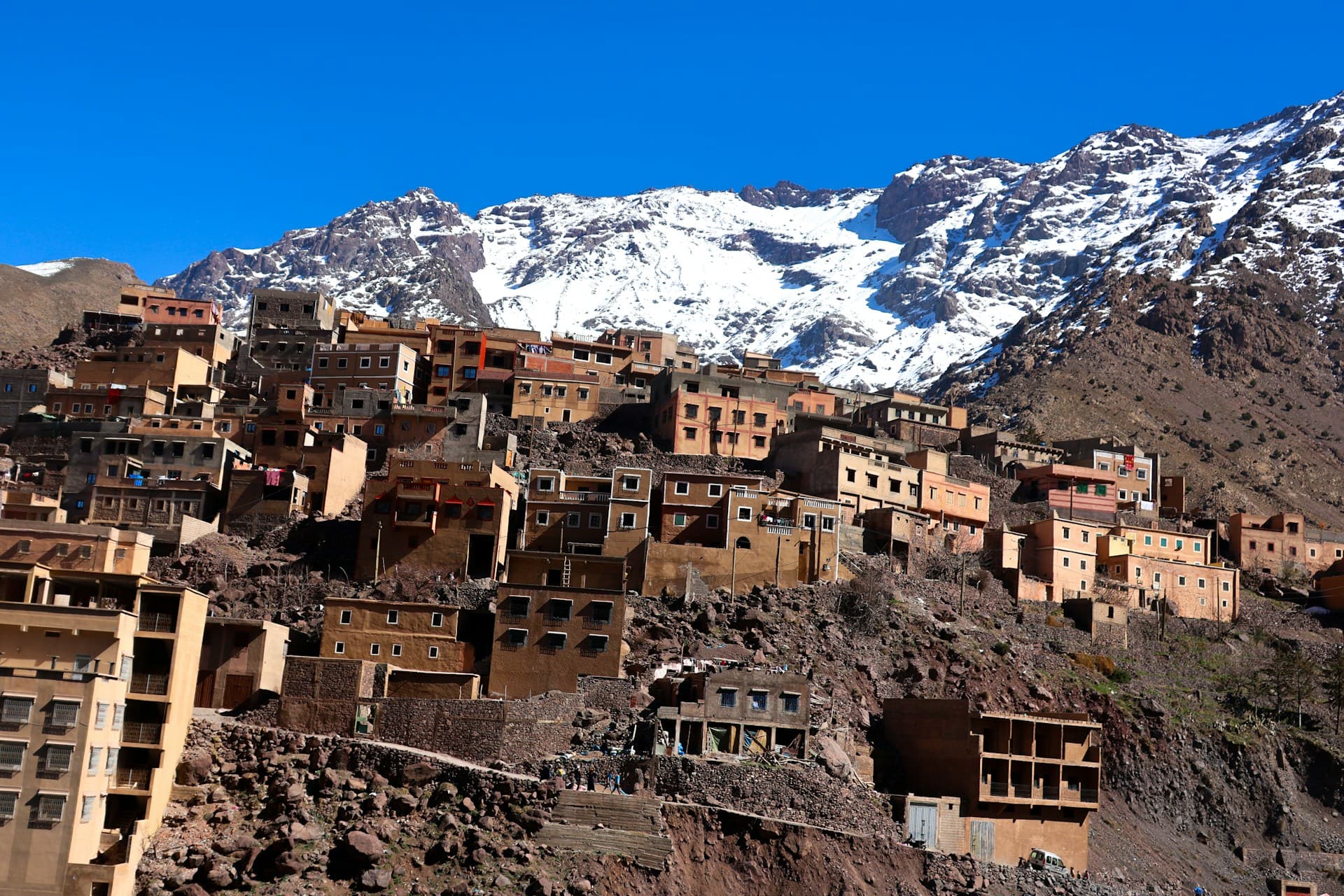
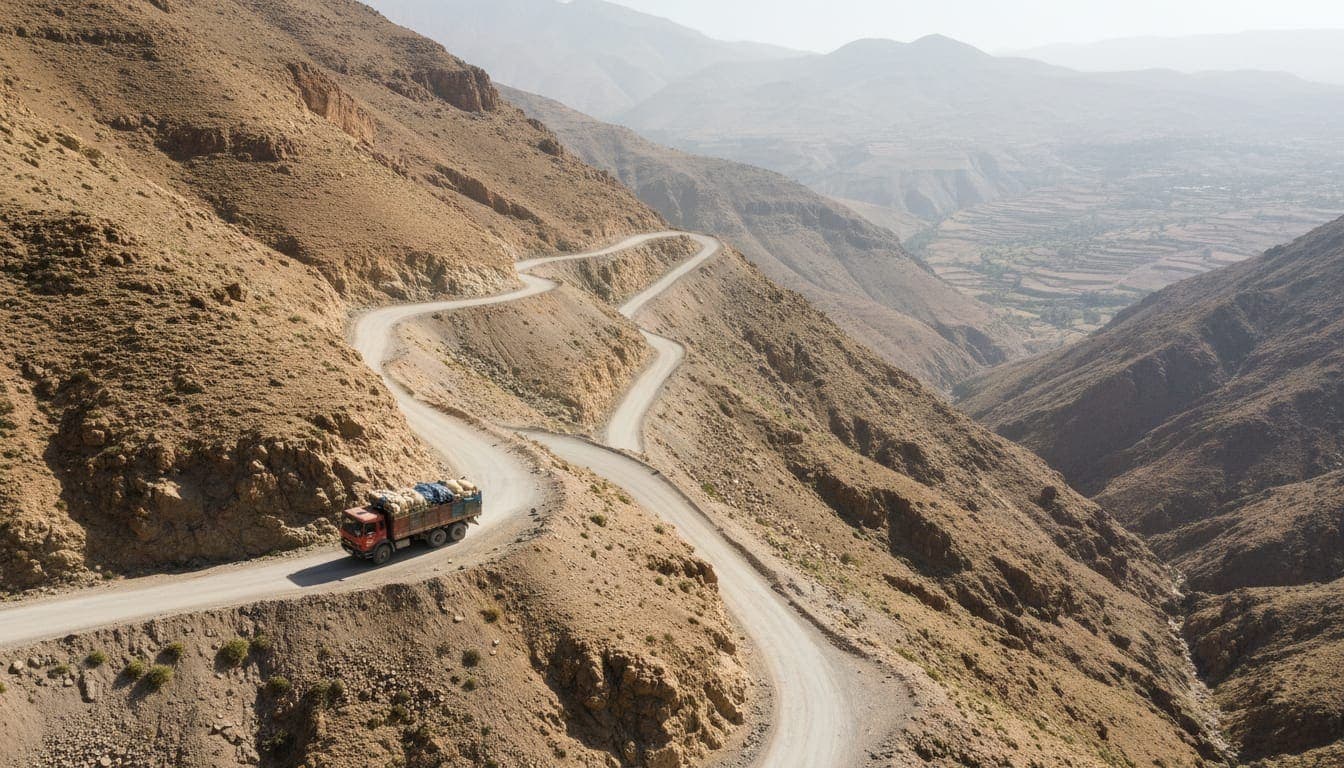
- Mountain passes. The Tizi n'Tichka (2,260 m, the highest paved road in North Africa, on the classic Marrakech→desert route) is a relentless ribbon of switchbacks with steep drop-offs, no barriers in places, and slow trucks you must overtake on blind bends. The Rif roads to Chefchaouen are similar. In rain or fog they are genuinely hard.
- Livestock and the unexpected. Sheep, goats, donkeys, dogs and carts share rural roads, often appearing around bends. Night makes them nearly invisible.
- Police checkpoints and speed traps. Frequent, especially on approach to towns and on rural roads. Radar enforcement is heavy and on-the-spot fines (cash) are common. You need to know the limits change constantly — 120 on autoroute, 100, 80, 60, then 40 through a village with no obvious warning.
- Rural signage and GPS. Secondary roads can be Arabic-only, and GPS doesn't always know closures, washouts, or the real condition of a 'road' that turns to piste.
- City driving. Marrakech and Fes traffic is 'organized chaos' — scooters from every direction, undefined lane discipline, and assertive right-of-way. And the medinas themselves are car-free, so you can't drive to most riads anyway.
Can you drive in the medinas?
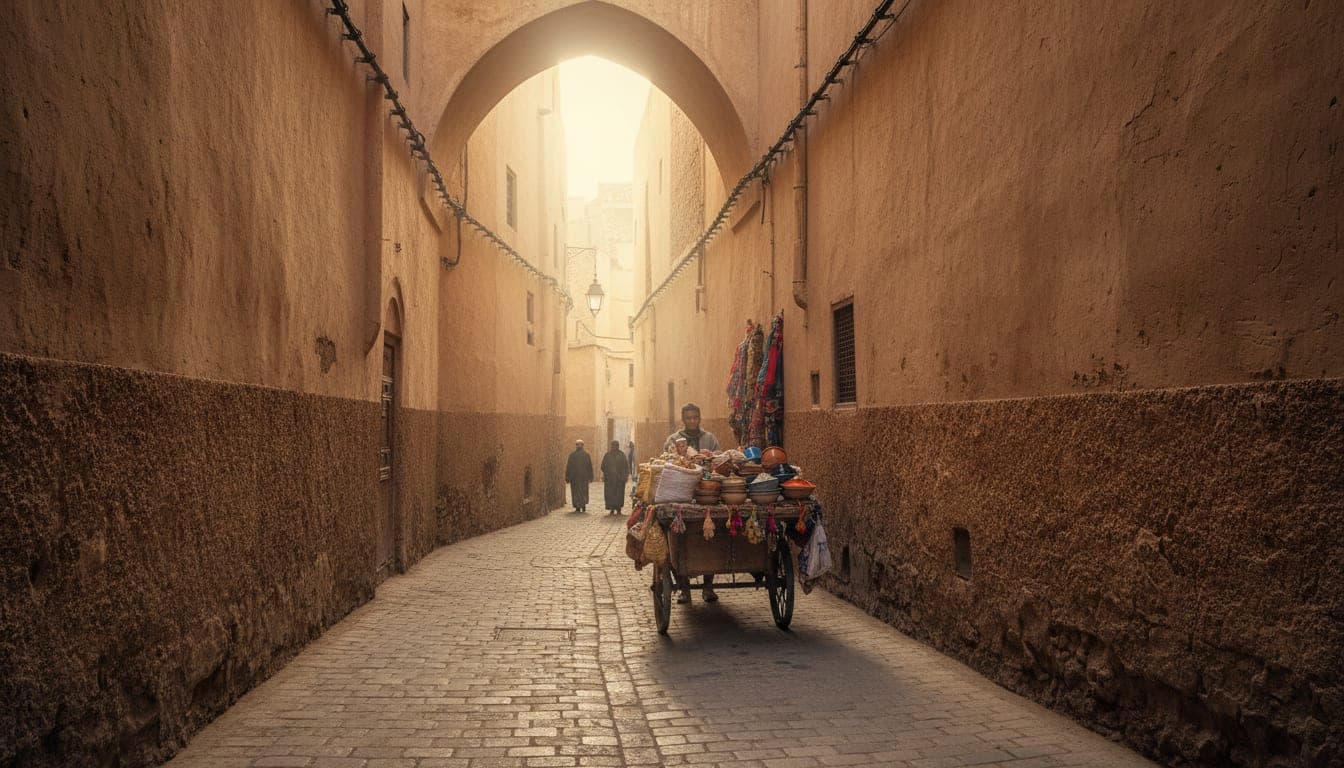
No — and this surprises people. The historic medinas of Fes, Marrakech, Chefchaouen and Essaouira are largely pedestrian-only mazes; Fes el-Bali is the largest car-free urban area on earth. You park outside and walk (or take a porter cart) to your riad. So even if you rent a car, you'll be hunting for secure parking on the medina edge in every city — a daily friction the brochures skip.
Do you need an International Driving Permit, and what are the rules?
Bring an International Driving Permit (IDP) alongside your home licence — it's cheap, legally expected for tourists, and saves arguments at checkpoints. Drive on the right. Seatbelts are mandatory; phone-in-hand is fined. Carry your passport, licence, IDP, and the car's papers at all times for checkpoints. Keep cash for tolls and any fines. Avoid driving at night outside cities if you can — unlit roads, livestock, and oncoming high-beams make it the single riskiest thing a tourist can do here.
When does self-driving make sense — and when should you hire a driver?
Honestly: self-drive if your trip is mostly city-to-city on the autoroutes (e.g. a relaxed Atlantic-coast loop, or basing in one city with easy day trips), you're comfortable with assertive traffic, and you don't mind the parking hunt. Hire a private driver for the legs below — and most of our guests end up handing over the keys for exactly these:
| The leg / situation | Self-drive? | Why |
|---|---|---|
| City autoroute hops (Casa–Marrakech–Fes) | Fine | Modern, well-signed, easy |
| Tizi n'Tichka pass to the Sahara | Hard | Switchbacks, drop-offs, slow trucks, weather |
| The full Marrakech→desert→Fes loop in limited days | Stressful | 9–13 hr driving days; you arrive exhausted, not exploring |
| Rif roads to Chefchaouen | Hard | Tight switchbacks, similar to the Tichka |
| Anything ending in a medina | Annoying | Cars can't enter; daily parking hunt |
| Night driving outside cities | Avoid | Unlit, livestock, high-beams |
The thing the cost comparisons miss: a private driver-guide is only a little more than the true all-in cost of a rental (we break the numbers down in renting a car vs hiring a driver in Morocco), and you get far more than transport — you get someone who reads the road, handles the checkpoints, knows where to stop, and turns the nine hours over the Atlas into a conversation with a local instead of a white-knuckle ordeal. On a trip where the drive is the scenery — the Marrakech-to-desert-to-Fes route — that's the difference between arriving wrung out and arriving ready.
If you'd rather not lose the best days to the wheel, that's exactly the leg most of our guests hand to a driver: our 3-day Fes–Sahara route and the 10-day grand journey are built around a private driver-guide who does the hard roads so you don't. Or tell us your route and we'll tell you honestly which legs are worth driving yourself and which aren't.
Written by
Youssef El Alaoui
Lead Morocco Specialist
Born in Fes, based in Marrakech. Designs private itineraries for Morocco Beauty Spots and still argues mint tea is best in the Atlas.