From Cretaceous dinosaur beds to 500-million-year-old trilobites — the four main morocco fossil regions, the species you'll see at each, and how to tell a real specimen from one painted in a workshop.
Morocco fossils are among the most varied and accessible on Earth — a 500-million-year geological record exposed across the country's southern deserts and mountain ranges. Fossils in Morocco aren't a curiosity hidden in museums; they're quarried, traded, and displayed every day in towns like Erfoud, Rissani, and Alnif, and a short drive from those workshops you can stand on the actual beds. This guide maps the four main morocco fossil regions, names the species you'll see at each, and explains how to spot a real specimen from one that's been painted, glued, or sculpted in a back room.
It's also a guide we wish more first-time visitors read before they buy. Roughly half of what's sold to tourists in the medinas of Marrakech, Fes, and Chefchaouen is partially or fully fabricated, and the most beautiful trilobites in any shop are almost always the most retouched. Knowing what to look for changes both your eye and your wallet.
A short geological history of Morocco's fossil beds
Morocco's geology is unusually generous to fossil hunters. Three things make it so: deep time exposed at the surface with very little soil cover, a coastline that has shifted hundreds of kilometres over half a billion years, and erosion patterns that strip new material out every winter rain. The four regions covered below span four entirely different geological periods, sometimes within a 200 km drive of each other.
- Cambrian and Ordovician (~510–460 million years ago) — Anti-Atlas marine deposits, the original trilobite layer.
- Devonian (~419–359 million years ago) — Erfoud limestones, dense with Orthoceras (straight-shelled cephalopods) and goniatite ammonites.
- Jurassic (~200–145 million years ago) — Middle and High Atlas ammonite belts, including the Boulemane variety.
- Late Cretaceous (~100 million years ago) — the Kem Kem Group, Africa's most famous dinosaur layer.
The four major Morocco fossil regions
The Anti-Atlas — trilobites and crinoids
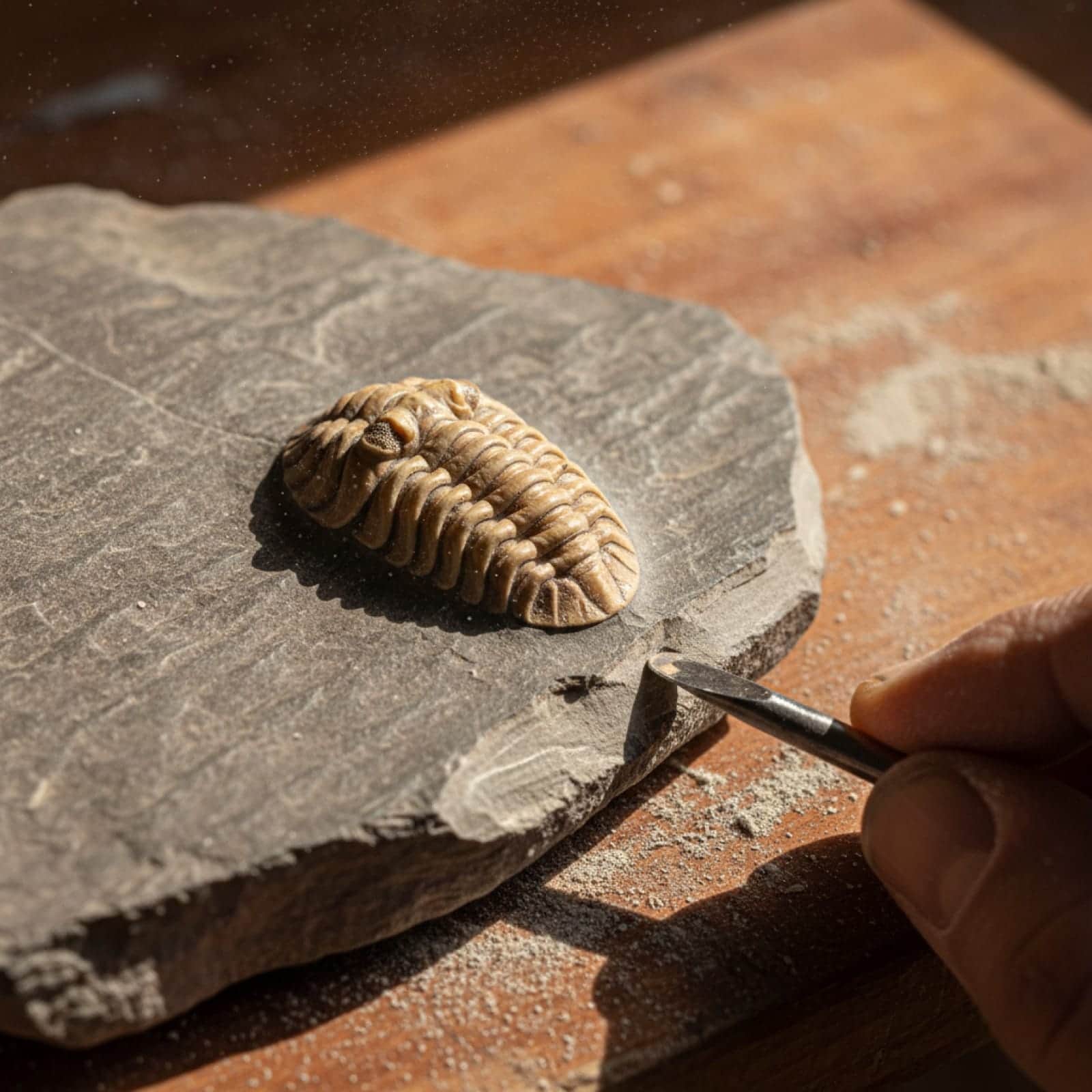
The Anti-Atlas holds the planet's most famous trilobite beds. Around Alnif, Tazarine, and Boudib, Devonian shales weather out hundreds of identifiable species — Phacops, the spiked Crotalocephalina, and the larger Acastoides. Most pieces sold in Erfoud were quarried within a few hours' drive of these three villages. For a visitor, the most photogenic spots are the open quarries on the road north of Alnif. You won't dig anything yourself, but you can watch preparators chisel trilobites out of host rock by hand, a process that takes anywhere from 8 hours to 3 weeks per specimen depending on quality.
The Kem Kem Beds — Morocco's dinosaur layer
Morocco dinosaur fossils almost all come from the Kem Kem Group, a band of red sandstone running along the Algerian border between Taouz and Erfoud. The kem kem fossils made the region globally famous in 2014, when Nizar Ibrahim's paper in Science confirmed Spinosaurus aegyptiacus was semi-aquatic — Africa's apex predator from 100 million years ago. Carcharodontosaurus saharicus (a Tyrannosaurus-scale theropod) and Sigilmassasaurus came from the same beds, alongside crocodylomorphs, pterosaurs, and a long list of sawfish and shark species from the ancient river system.
Visiting is a half-day commitment from Erfoud or Merzouga. The Kem Kem isn't a single site — it's a 250 km strip of escarpments, and most useful exposures sit on private excavation concessions. A local guide (typically arranged in Taouz) will take you to active digs and to the small Boudib fossil museum.
Erfoud and Rissani — the fossil-processing capital
Erfoud's economy runs on fossils. The Saturday market is the world's largest informal fossil trade — Orthoceras tables, ammonite slabs, polished cephalopod inlays, and crate after crate of bulk trilobites destined for European and Asian wholesalers. Rissani, 20 km south, hosts the smaller but better Sunday market where local quarry workers sell direct.
If you buy one fossil in Morocco, this is the right region to do it. Prices are 30–60% below what the same piece will cost in a Marrakech medina, and you can usually ask to meet the preparator who worked on your specimen — the most reliable authenticity signal there is.
Boulemane and the Middle Atlas — Jurassic ammonites
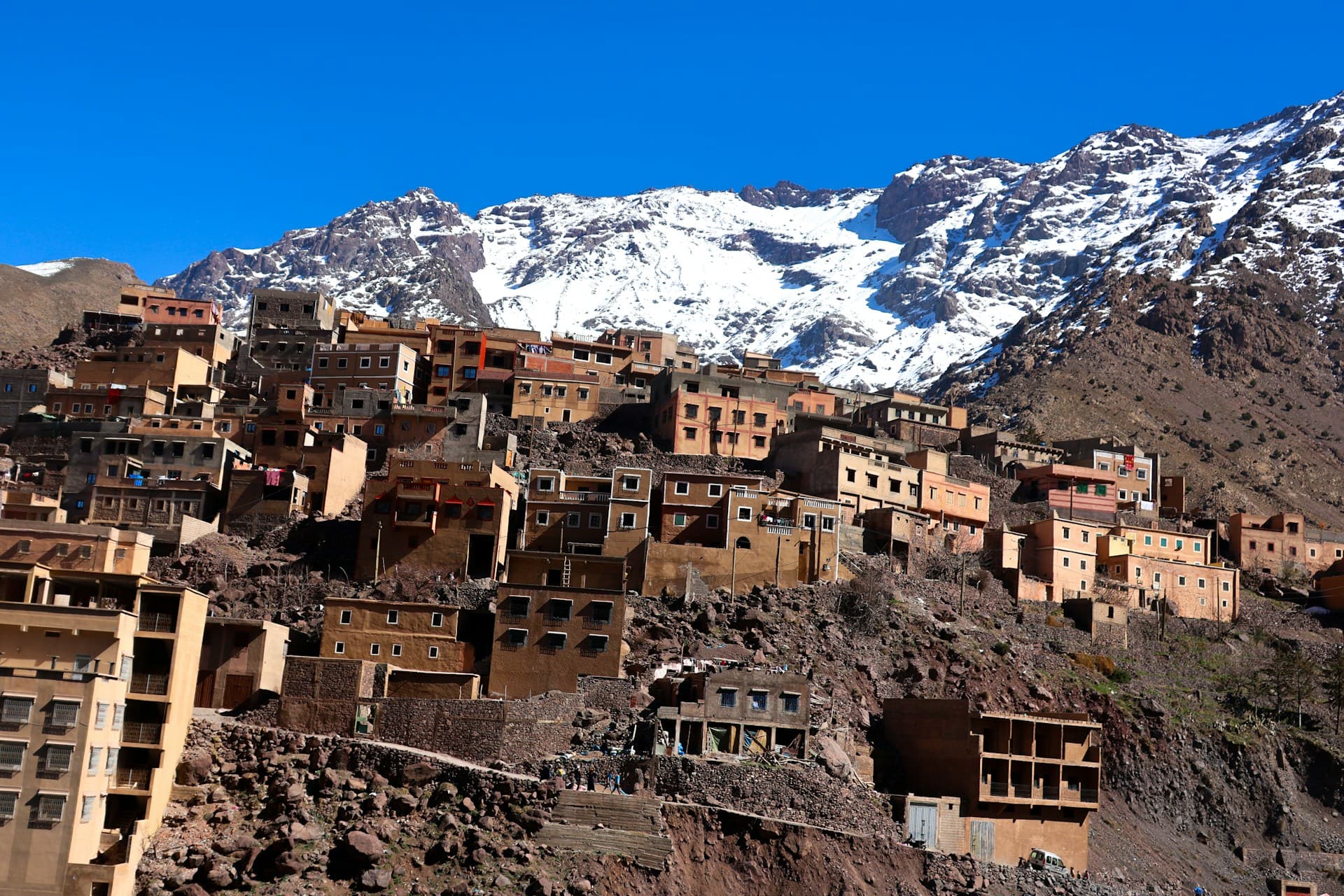
The Middle and High Atlas Jurassic beds yield ammonites in colours you won't see anywhere else — the iron-rich limestones turn shells gold, copper, and deep brown. The Boulemane region (between Sefrou and Midelt) is best known for the Boulemane ammonite, a regionally distinctive striped variety. For visitors this region is a bonus stop on a Fes-to-Merzouga drive rather than a standalone destination. Roadside stalls near Midelt sell the same pieces as Erfoud for slightly higher base prices but less haggling.
What species you'll find at each Moroccan fossil site
| Region | Geological period | Common finds | Average asking price (small piece) |
|---|---|---|---|
| Anti-Atlas (Alnif, Tazarine, Boudib) | Devonian / Ordovician | Phacops, Crotalocephalina trilobites; crinoid plates; small orthoceras | 100–800 MAD |
| Kem Kem (Taouz, Boudib) | Late Cretaceous | Spinosaurus & Carcharodontosaurus teeth; mosasaur vertebrae; sawfish rostral teeth | 150–2,500 MAD per tooth |
| Erfoud–Rissani axis | Devonian (mostly) | Orthoceras blocks; goniatite ammonites; polished slabs and tabletops | 200–8,000 MAD per slab |
| Boulemane / Middle Atlas | Jurassic | Iron-rich ammonites; calcified crinoid stems | 150–1,500 MAD |
Where to find fossils in Morocco — for visitors who want to see the beds
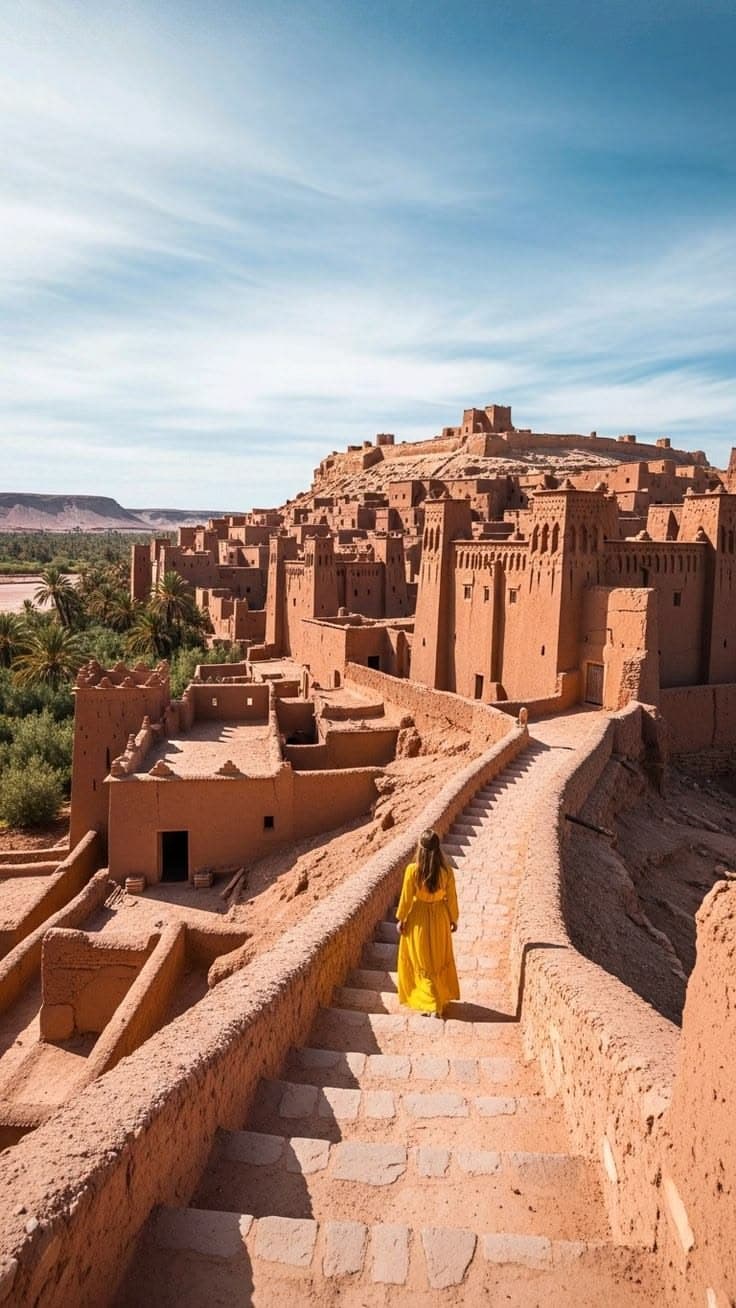
There are three honest ways to do this. The first is to fly to Errachidia or drive into Erfoud and join a half-day fossil tour with a local guide; this is the fastest, costs around 600–900 MAD per person, and gets you onto an active preparation workshop and one open-air quarry. The second is to add an Anti-Atlas detour to a southern Morocco trip — Alnif sits on the road between Tinghir and Erfoud, so the addition is one extra night, not a separate trip. The third is to commission a private overnight from Marrakech that combines Aït Ben Haddou, the Dades Valley, and the Kem Kem beds.
For first-time desert travellers also weighing the Sahara, our Merzouga vs Zagora call applies here too — the fossil layer is closer to the Merzouga side, so if you're choosing your only desert visit, Merzouga lets you see both the dunes and the Kem Kem in the same loop.
Buying fossils in Morocco — what to look for, what to avoid
The three common fakes
- Fully sculpted concrete trilobites painted to look authentic. Test: tap with a fingernail — concrete sounds hollow and dull, a real shale-mounted trilobite rings sharp.
- Composites — a real but fragmentary trilobite head glued onto a sculpted body. Look for a colour seam or a too-smooth transition between body and matrix, and inspect the underside of the rock for a synthetic shelf.
- Painted enhancement on a real specimen. The trilobite is real but its colour has been heightened to look more striking. Less of a problem ethically — the fossil is genuine — but you've paid extra for paint.
Authenticity checks you can do in two minutes
- Look at the underside of the matrix. A real trilobite has a continuous rock matrix; a composite often has a visible shelf where the real top sits on synthetic backing.
- Check the legs and antennae under a 10× loupe (most fossil sellers will hand you one). Real trilobite appendages show hairline cracks where the calcite split; fake ones are unnaturally smooth and uniform.
- Ask the seller exactly where the piece was prepared. A specific answer (e.g. "Alnif workshop, three weeks") suggests a real specimen. A vague "from the south" usually doesn't.
- For dinosaur teeth: real Kem Kem teeth show visible serrations along the edge and root striations near the base. A "Spinosaurus tooth" with a perfectly smooth surface and no serrations is almost always cast resin.
Legal and export considerations
Morocco classifies fossils as cultural patrimony, which in practice means: small loose specimens (single trilobites, individual teeth, polished slabs under roughly 30 cm) leave the country freely as souvenirs. Larger or museum-grade pieces — articulated skeletons, mounted matrix over a few kilos, anything that looks like it belongs in a university collection — technically require an export permit from the Ministry of Culture. Most travellers never encounter this, but if a seller is offering you a complete Spinosaurus tooth in articulated jaw for €500, you are buying either a fake or a smuggled piece. Walk away.
Fair pricing benchmarks
A small unrestored Phacops trilobite from Alnif costs 100–250 MAD direct in Erfoud, 300–600 MAD in Marrakech. A polished Orthoceras tabletop runs 1,500–4,000 MAD in Erfoud, often double in tourist cities. A genuine small Spinosaurus tooth (3–4 cm with intact serrations) is 250–800 MAD direct from Erfoud sellers. Anything advertised well below these ranges is almost certainly fake or composite — there is no "hidden bargain" in this market.
Where to see fossils on display (no buying required)
- Boudib fossil museum — small but real, with a Carcharodontosaurus skull cast and original Kem Kem specimens.
- Atlas Studios museum, Ouarzazate — a small geological wing sits alongside the film-studio displays; worth the 15 minutes if you're already there.
- The Erfoud Saturday market — not technically a museum, but the closest thing on earth to a working fossil cathedral.
- Hassan II University, Casablanca — academic collection, open to visitors by appointment.
“If you only buy one fossil in Morocco, buy it from the preparator who chiseled it out of the rock. Every link in the chain after that adds a fake premium.”
Building a fossil stop into a private Morocco itinerary
For travellers who want to combine the fossils with the rest of southern Morocco, the natural shape is a 4–5 day private circuit from Marrakech: Aït Ben Haddou the first day, Dades the second, then two nights in Erfoud or Merzouga with a Kem Kem morning and an Anti-Atlas afternoon woven in. If you're already considering our 7-day imperial-to-desert loop, adding the fossil layer costs one extra day. Our trip planner walks through the options for travellers who want to design this around their own dates.
Written by
Youssef El Alaoui
Lead Morocco Specialist
Born in Fes, based in Marrakech. Designs private itineraries for Morocco Beauty Spots and still argues mint tea is best in the Atlas.